












19.04.26
How Biotech ingredients are enhancing your pleasure
Pleasure is often assumed to be instinctive, yet it is quietly shaped by what we place on the body. This article examines how biotech ingredients are redefining intimate care - revealing that sensation is not just felt, but formulated.

( Intimate insights )
19.04.26
BIOTECH VS SYNTHETIC How Biotech ingredients are enhancing your pleasure
BIOTECH VS SYNTHETIC: HOW BIOTECH INGREDIENTS ARE ENHANCING YOUR PLEASURE
For a long time, intimacy care has sat in a strange category - somewhere between medical necessity and taboo indulgence. Very little that acknowledged that pleasure is not just physical; it is biochemical, neurological, emotional and environmental.
There is also a more confronting layer to this category, one that is difficult to ignore once you see it. Intimate care has long been shaped by profit margins, not by the body. Heavy fillers, simplified bases, and white-labelled formulations became the norm, not because they were the most effective, but because they were the easiest to produce at scale.
Bioactive ingredients were never part of the conversation. And this sits alongside another truth: how little we have historically understood about the female body itself. For so long, female anatomy existed within a kind of blind spot—under-researched, underfunded, and often interpreted through a patriarchal lens. Yet products continued to be created for it, many of which still exist today, operating within that same outdated framework. These formulations do not support the delicate ecosystem of the female body; they overlook it entirely. They fail to consider the microbiome, the nuance of pH, the role of arousal, or the sensitivity of the nervous system. And in heterosexual dynamics, this has wider implications. Female pleasure is not secondary - it is central to the experience of both people involved. When the body is supported, when it feels balanced, responsive, and at ease, it allows intimacy to open in a way that is more connected, more expansive, and far more aligned than what these formulations were ever designed to offer.


There’s a particular phrase I’ve come to dislike. “You’re worth it.” It appears everywhere; softly printed across beauty campaigns, whispered through the language of self-care. And yet, when it comes to the products designed for our most intimate experiences, that sentiment rarely holds its weight. Because if we were truly “worth it,” the formulations would look very different.
This is where biotech quietly enters the conversation.
“Synthetic” is often positioned as the villain in this story. The word itself carries a kind of emotional residue, suggesting something artificial and disconnected from nature. But the truth is less moral, more technical. Synthetic ingredients are simply constructed molecules. Some are excellent. Many are not! The issue is not that something is made in a lab, It’s how and why it is made.
In intimate care, this distinction becomes tangible. You feel it almost immediately. A formulation that disrupts the body doesn’t always announce itself loudly. It shows up in quieter ways; subtle dryness, a shift in pH, a sense that something is slightly off. The body pulls back and sensation dulls. Over time, we normalise that experience, especially women.
Biotech offers a different approach.
Not artificial. Not separate from nature. But an extension of it through processes like fermentation and cellular engineering. Biotech allows us to create ingredients that are biologically identical—or in some cases, more refined—than those found in nature. The result, cleaner, more stable and more precise.
What interests me most is not the science itself, but what the science allows. Because when you begin to formulate with this level of precision, you’re no longer just creating a product that “works", you’re shaping an experience. Hydration is no longer just about moisture, it becomes glide, ease, responsiveness. The microbiome is no longer an abstract concept; it becomes comfort, balance, trust within the body. Absorption becomes immediacy, texture becomes sensation and the body, notices!
I think about this often in the context of pleasure. How easily it is interrupted, how much of it relies on the nervous system feeling safe enough to stay open, and how rarely we consider that the products we use can either support that openness, or subtly close it.
Biotech, at its best, feels like a return to something more honest. A recognition that the body is already intelligent and that our role is not to override it, but to meet it there. To create formulations that work with its rhythms, its chemistry, its sensitivity. To remove friction, in every sense of the word.
This is, in many ways, the future of intimate care. More aligned with how the body actually works, rather than how the market has historically treated it.
What has long been overlooked, this category of intimate care, still riddled with stigma, still treated as an afterthought, is beginning to change.
There is a growing expectation that these products should meet the same standards as high-end skincare. That they should be developed with rigour, with intention, with respect for the body they are designed for. And we are proud to be part of that shift.
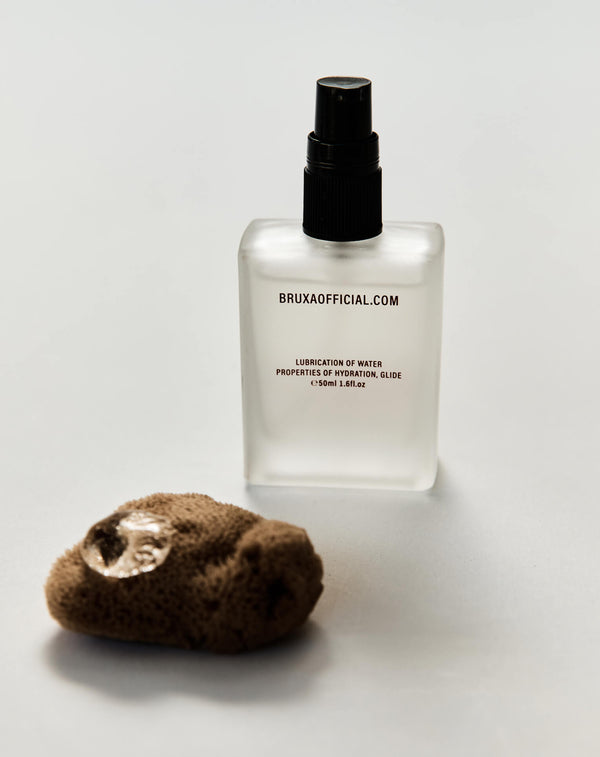
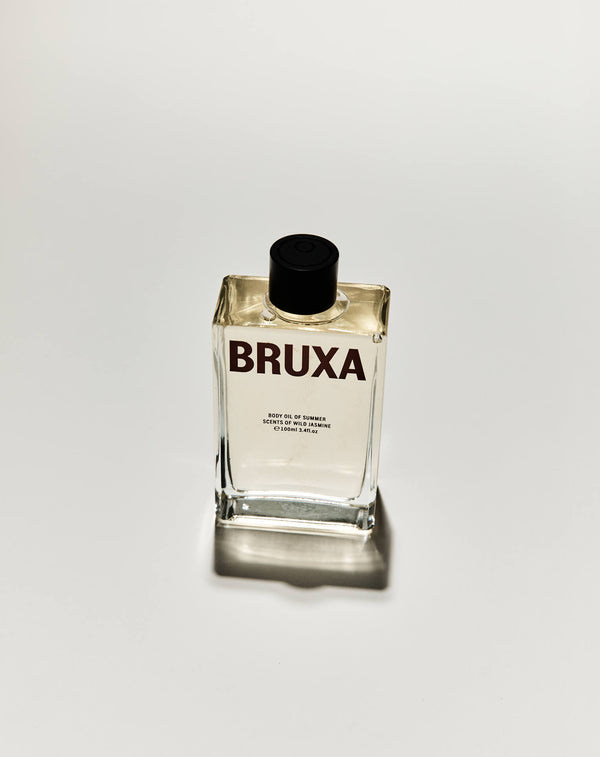
At BRUXA, our formulations are not conceived in isolation. They are developed over years, in collaboration with chemists, sexologists, and specialists working at the forefront of bioactive ingredients—many of which are already shaping the future of luxury skincare. Because the skin of the body, the face, and the intimate areas are not separate conversations, they are part of the same system.


